
What Should You Expect During a Robotic Prostate Surgery Procedure?
Robotic prostate surgery can feel intimidating when you first hear about it, especially if you are already dealing with anxiety, urinary symptoms or the shock of a prostate diagnosis. Many men do not know what actually happens on the day of surgery, how the robot is used or what the recovery feels like. This blog will walk you through the full experience in a clear and reassuring way so you know exactly what to expect and can prepare without fear or confusion. If you want a transparent and simple explanation of robotic prostate surgery, keep reading.
What Is Robotic Prostate Surgery and Why Do Doctors Recommend It?
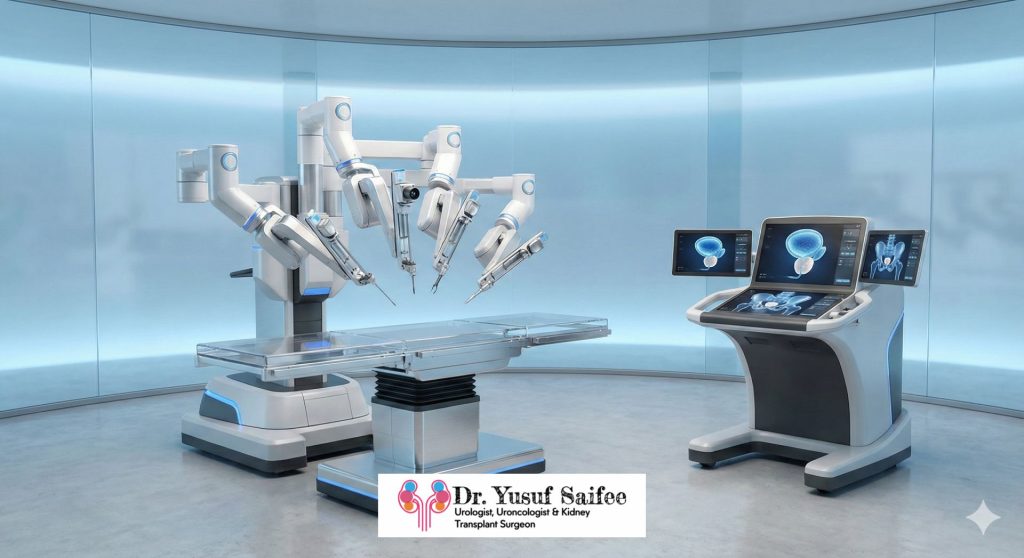
Robotic prostate surgery, also called robot-assisted laparoscopic prostatectomy, uses advanced instruments that allow the surgeon to remove the prostate through tiny openings rather than a large cut. The surgeon controls the robotic arms from a console with magnified three dimensional vision and highly precise instruments.
This approach aims to remove the prostate safely while protecting nerves, reducing blood loss and supporting faster recovery.
Why many men prefer robotic prostate surgery
Robotic prostate surgery is often chosen because:
- It uses small cuts, which usually means less pain after surgery.
- It offers excellent visual magnification, which helps the surgeon protect nerves related to erections and bladder control.
- It often means quicker return to normal activities, which is reassuring for men who want minimal disruption to work and family life.
- It reduces blood loss, which makes the procedure safer for many patients.
Robotic surgery is still performed entirely by the surgeon. The robot improves precision but the surgeon remains fully in charge of every movement.
What Happens Before Robotic Prostate Surgery?
Patients often worry about unknowns. Knowing the steps makes the process calmer and easier to navigate.
Here is what usually happens before surgery:
- A detailed consultation takes place where your urologist explains the diagnosis, treatment goals and benefits of robotic surgery.
- Blood tests and imaging are reviewed to confirm fitness for anesthesia.
- You may be asked to stop certain medications like blood thinners a few days before surgery.
- Fasting is required on the night before the procedure.
- Bowel preparation may be recommended depending on the surgeon’s protocol.
- You meet the anesthesiologist who checks your vitals and discusses anesthesia safety.
Many men say this pre-operative phase feels surprisingly organised and structured, which helps reduce anxiety.
What Happens on the Day of the Robotic Prostate Surgery?
This is the part most men are curious about. Here is a simple breakdown of what you will experience.
- You check into the hospital or surgical centre, complete paperwork and change into hospital clothing.
- An intravenous line is placed to administer medications and fluids.
- General anesthesia is given so you sleep comfortably throughout the procedure.
- Small keyhole openings are made in the abdomen, usually five or six, through which robotic instruments are inserted.
- The surgeon sits at the robotic console, guiding every movement with precision and steady magnified control.
- The prostate is carefully separated from surrounding structures, including nerves that control erections and urinary control.
- If needed, lymph nodes are removed, depending on your diagnosis.
- The bladder is reconnected to the urethra, restoring the urinary passage after prostate removal.
- A urinary catheter is placed, which will stay for a few days to support healing.
- The small openings are closed, usually with dissolvable stitches.
Most procedures take two to four hours depending on anatomy, prostate size and complexity. You remain asleep the entire time.
What Should You Expect Immediately After Robotic Surgery?
The first hours after surgery are usually spent in a recovery room where nurses monitor your vitals and comfort. You may expect:
- Mild abdominal discomfort from the small incisions.
- Feeling of bloating or shoulder tip pain due to gas used during surgery.
- A urinary catheter, which will stay for five to ten days.
- Fluids through an IV line, followed by gradual oral intake.
- Help walking within a few hours, which helps reduce the risk of clots.
Most patients go home the next morning, although some may stay for one extra day based on recovery.
What Happens During Recovery at Home After Robotic Prostate Surgery?
Recovery is usually smoother compared to traditional open surgery. Here is what to expect:
- Walking regularly helps reduce stiffness and supports blood circulation.
- Pain is usually mild and managed with oral medicines.
- Incisions heal quickly since the openings are small.
- The catheter is removed during a follow-up appointment.
- Leakage of urine may occur initially, which improves gradually with pelvic floor exercises.
- Most men resume light work within one to two weeks, depending on comfort.
- Complete healing continues for several weeks, especially for urinary control and sexual function.
Doctors encourage gentle activity and avoiding heavy lifting until the surgeon clears you.
Who Is a Good Candidate for Robotic Prostate Surgery?
Robotic surgery is suitable for most men, especially those with:
- Localised prostate cancer that has not spread outside the prostate.
- A desire for quicker recovery and smaller incisions.
- Medical fitness for anesthesia.
- A preference for precise nerve-sparing surgery when possible.
Your surgeon decides suitability after evaluating your reports and discussing your goals.
What Are the Limitations or Risks of Robotic Prostate Surgery?
Although robotic prostate surgery offers many advantages, it also has limitations. Understanding them creates realistic expectations.
- Urinary leakage may persist for several weeks before improving.
- Erectile function recovery varies, depending on age, nerve preservation and pre-surgery sexual health.
- Not every man is eligible for full nerve preservation, especially if cancer lies close to the nerves.
- Some men may need additional treatment later, depending on pathology results.
- As with any surgery, risks of bleeding, infections or clots exist, though they are usually low with robotic surgery.
A clear and open discussion with your urologist helps you understand your personalised risk profile.
What Should You Ask Your Surgeon Before Robotic Prostate Surgery?
These questions help you feel confident and well prepared:
- What results do you expect in my case?
- Will both nerves be preserved?
- How long should I expect urinary leakage?
- How soon can I resume work and exercise?
- Do I need any additional tests before surgery?
- What is your experience with robotic prostate surgery?
Conclusion
Robotic prostate surgery may sound complex at first, but it becomes far less intimidating once you understand how it works, what happens on the day of surgery and what to expect during recovery. The goal is to safely remove the prostate with minimal discomfort, reduced hospital stay and the highest possible chance of preserving urinary and sexual function. If you require prostate removal or are exploring surgical options, speaking to a highly experienced urologist can help you make a confident and informed decision.