
Kidney Stones and Ureteroscopy: Everything You Need to Know
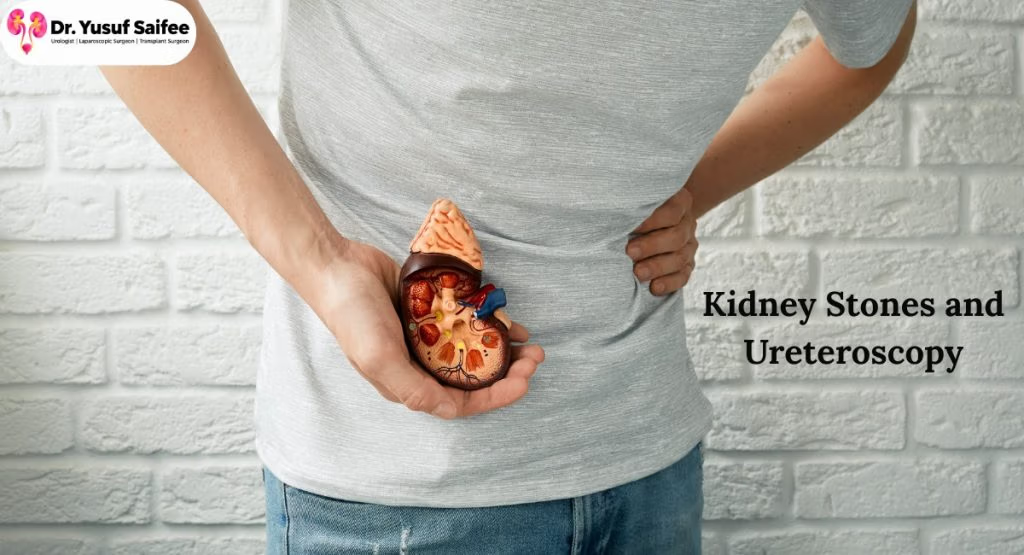
The standard of care treatment for small to medium-sized kidney and ureteral stones is what I am going to explain today.
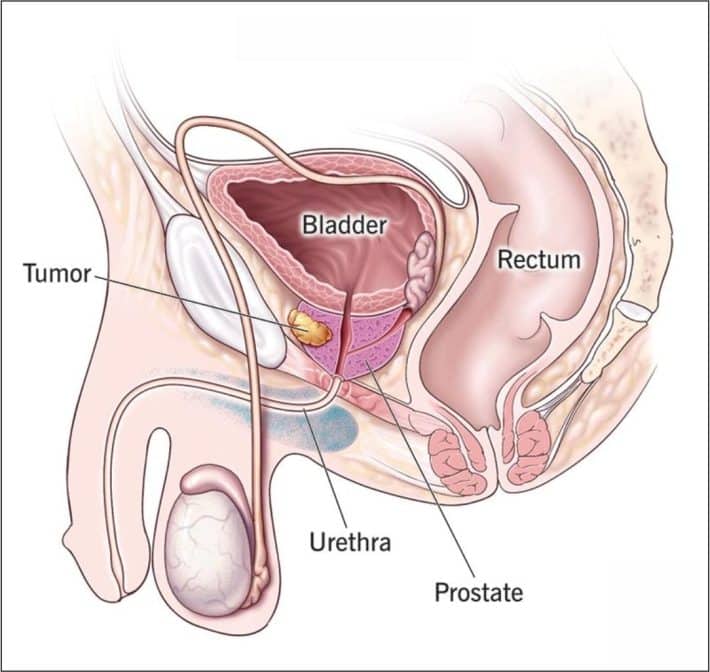
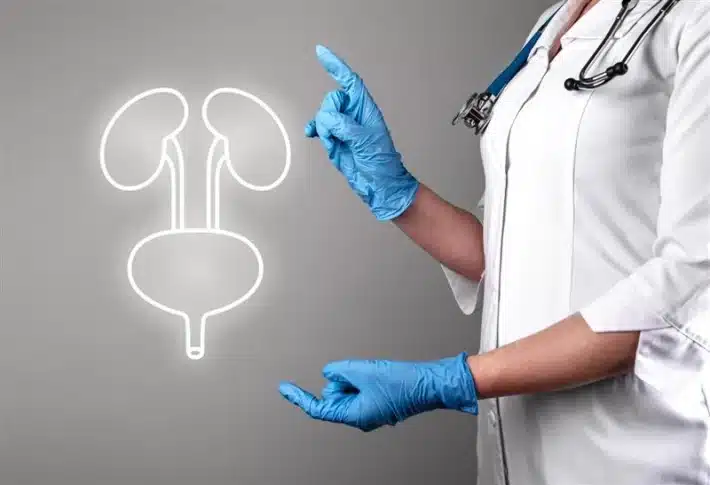
So first, let’s go over some anatomy. First, you have a kidney; the kidney is the organ that filters the blood to get rid of some of the toxins, and it’s what makes your urine. And then you have your bladder; a bladder is the organ that stores the urine so that you can then go to the bathroom and get rid of those toxins.
Now, when salt, minerals, and proteins get a little out of whack in the urinary system, that’s where you get kidney stones. The most common kidney stone is called a calcium oxalate stone. The second most common stone is a uric acid stone, and then you have other things out there like calcium phosphate, magnesium ammonium phosphate stones, etc., etc.
Now, the classic symptom of the kidney stone is, “Doc, it hurts here, it radiates to my front, and I’m gonna go throw up in that toilet bowl right there.” Some people will get a fever. Some people will get bad chills. Some people will pee some blood. Many people will just end up in the emergency room. Now, in some people, they may not get all the symptoms. Lately, I’ve had a bunch of people where they just get blood in the urine, or some people that just get nauseous, but they just have this dull pain under their rib cage.
There are two main ways of diagnosing a kidney stone.
There are actually a lot of ways of diagnosis in this case, to be honest. But there are two main ways: one is an ultrasound and the other is a CAT scan. A CAT scan is the gold standard. A CAT scan tells us exactly where they are, a CAT scan tells us how big they are, and CAT scans tell us if they’re blocking the kidney. In urology, we tend to do a lot of ultrasounds because they’re safer, they’re quicker, and they’re less expensive. If someone has a complicated stone or we need more answers, that’s when I’m going to jump and do a CAT scan, but the ultrasound will tell me where the stones are, if the kidney is swollen, and if the kidney is having a lot of trouble.
Now, let’s pretend you have stones in your ureter that’s causing a blockage.
So, we’ll see reports that say, “six-millimeter stone in the mid-ureter, with hydronephrosis.” Hydronephrosis means water on the kidney. When that happens, we’re going to certainly try medical therapy for you to get the stone out. So, we’ll put you on hydration. We’ll give you pain medicine like Toradol, Sprix, Tramadol, or oxycodone. We’ll give you a medicine called tamsulosin, which is Flomax; it helps relax the ureter—that’s the tube that connects the kidney and the bladder—so that you can try to pass these stones.
But if you can’t, then it’s time for us to jump in. And as I say, go fishing. And that’s when I’m going to bring someone to the operating room. They’re going to get an IV, they’re going to get antibiotics, they get wheeled back to the room, and then I go look inside.
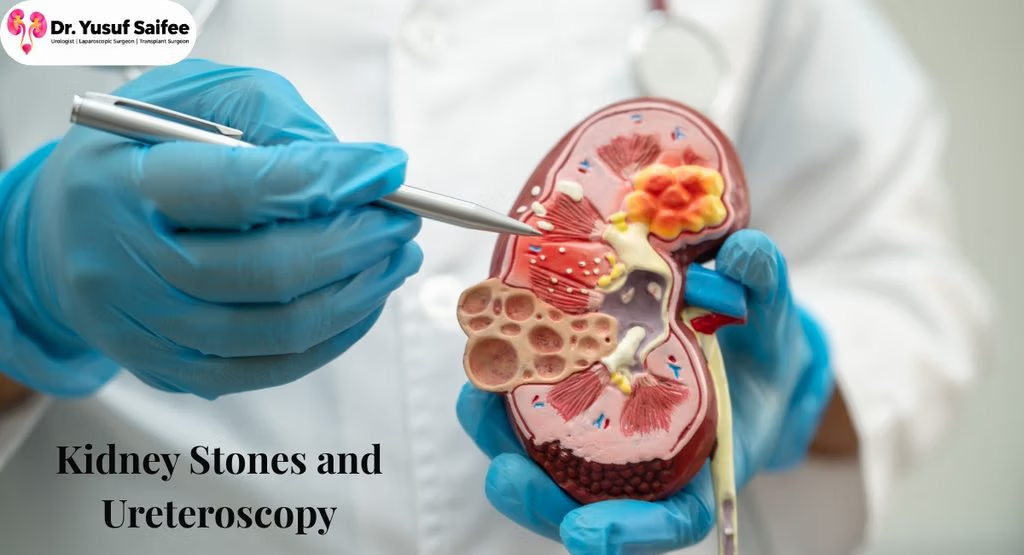
So first, we start with looking inside the bladder. A lot of times, I will do an x-ray of the kidney so that I can see the anatomy and see where the stones are located. And then I’m going to put a ureteroscope—this is a key part of our RIRS kidney stone treatment in Indore. So this is a tiny scope we put into the ureter and look up into the kidney.
If the stone is in the ureter, a lot of times we can take a laser fiber for ureteric stone laser treatment in Indore and literally play asteroids, and just break apart the stone. It turns to dust. We can basket the stones out or just let your own body remove the debris, and then we put a stent in. When we’re done, we’ll talk about stents in a second.
If the stones are in the kidneys, we’re going to go up all the way into your kidney to perform laser surgery for kidney stones, and we’re going to once again play asteroids and hit all these stones and literally turn them to dust. Once again, when we’re done, we put a stent into the kidney.
Now, stents are tough. Stents are not the best thing in the world, but they guarantee that the kidney is going to drain. And as long as the kidney is draining, you’re going to be healthy. You may not feel good, but you’re going to have a healthy kidney. Stents will cause urgency to urinate, frequency. You may get some constipation from it, and you’re certainly going to get some back pain. The back pain is mostly when you urinate. Why is that? Because when you urinate, some of that urine is going to go up that stent. Your body’s not used to that, and your kidney can be like, “Oh, that didn’t feel too good,” and you’re certainly going to see some blood in the urine. Please don’t let any of this scare you. It’s just part of the business, but we’ll give you medicine to help. We’ll give you stuff for burning, some antibiotics, and pain medicine whenever you need it.
Now, here’s the hard part. Some people bring us very small ureters, and we can’t know that until we get you into the operating room. There’s no CAT scan, ultrasound, MRI, or whatever that’s going to tell us the size of the ureter. And the ureter is basically the size of spaghetti, but a lot of ureters give us some stretch. They stretch, they dilate, and many of the times, we can get the cameras where we need them to go on the very first surgery.
But in somewhere around five percent of cases, we can’t get the camera where it goes. And so what we’ll do is we’ll put a stent in. We’ll say we tried, and then over a period of about four, five, six, seven days, that ureter, which is pretty thin, is now going to stretch, and it’s going to allow that camera to go in and out at a second go-around. So, very commonly, we’ll bring people back to the operating room and we’ll do as I describe: a second-look ureteroscopy.
This is where I bring you back. Once again, you get knocked out, we give you antibiotics. Again, we take the camera and we look right up into the kidney and into the ureter. And as I said, once the stent is in, the ureter dilates nicely and we can get that camera inside. My analogy: think of it like a square peg in a round hole. Sometimes you can get that square peg to fit, but sometimes you can’t.
Now, once we get you all cleared up, that’s when the stent comes out. Many times, we’ll stage these. We will do the initial laser stone removal surgery on what we’ll call day one, and a week later, we’ll clean up any leftover stones. We’ll use a laser again sometimes. Sometimes we’ll basket some stones out, and we can get the stent out, usually a week later.
Now, sometimes we can’t. Sometimes people get sick. Sometimes people have a lot of stones in there, and we need the body to chill out. Some people bring us an infection when they were first stented; in other words, they had an infection in their kidney. We need that kidney to calm down. And so we’ll wait a couple of weeks, and then we’ll get them all cleared up.
But that’s basically ureteroscopy to break apart kidney stones.