

Advances in Kidney Cancer Treatment: From Surgery to Targeted Therapy

A kidney cancer diagnosis can feel overwhelming. Along with fear often comes confusion about treatment options, timelines, and what life will look like afterward. The encouraging news is that kidney cancer care has advanced rapidly over the past decade. Treatments today are more precise, less invasive, and far more personalised than ever before.
From robotic surgery for kidney tumors to cutting-edge immunotherapy for kidney cancer, modern medicine now offers multiple effective paths forward. This guide explains how kidney cancer treatment plans are created, what the latest treatment options involve, and how these advances are improving survival and quality of life.
Understanding Kidney Cancer Treatment Planning
There is no single treatment that fits everyone. Kidney cancer treatment is tailored to the individual, based on several important factors.
Factors That Shape Kidney Cancer Treatment Plans
- Stage and size of the tumor
- Whether cancer has spread beyond the kidney
- Tumor location within the kidney
- Overall kidney function
- Age and general health
- Personal preferences and lifestyle
A multidisciplinary team often includes a urologist, medical oncologist, radiologist, and sometimes a radiation oncologist. Together, they design treatment plans that balance effectiveness with long-term wellbeing.
Surgery: The Foundation of Kidney Cancer Treatment
For most localized kidney cancers, surgery remains the primary and most effective treatment.
Partial Nephrectomy: Preserving Kidney Function
When tumors are small and confined, surgeons often remove only the tumor and a small margin of surrounding tissue.
Benefits include:
- Preserving kidney function
- Lower risk of long-term kidney disease
- Excellent cancer control
This approach is now preferred whenever safely possible.
Radical Nephrectomy: When Complete Removal Is Needed
In larger or complex tumors, removing the entire kidney may be necessary.
This involves:
- Removal of the kidney
- Sometimes nearby lymph nodes
- Occasionally surrounding tissues
Even with one kidney, most people live healthy lives with proper monitoring.
Robotic Surgery for Kidney Tumors: A Major Advancement
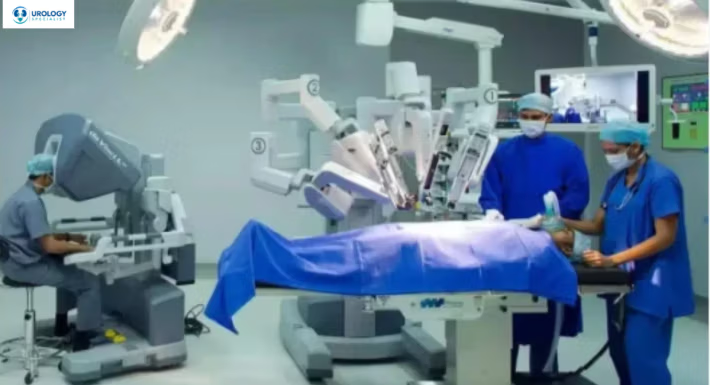
One of the most significant breakthroughs in kidney cancer treatment is robotic surgery for kidney tumors.
How Robotic Surgery Works
Robotic systems allow surgeons to perform complex procedures through small incisions using robotic arms controlled with precision.
Benefits of Robotic Kidney Surgery
- Smaller incisions
- Less blood loss
- Reduced pain
- Shorter hospital stay
- Faster recovery
- Improved surgical accuracy
Robotic-assisted partial nephrectomy has become a gold standard in many centres for suitable cases.
Minimally Invasive and Ablative Therapies
For patients who cannot undergo surgery due to age or medical conditions, non-surgical options may be considered.
Common Ablative Treatments
- Cryoablation (freezing the tumor)
- Radiofrequency ablation (heat-based destruction)
These are usually guided by imaging and suitable for small tumors.
Targeted Therapy: Treating Cancer at the Molecular Level
Targeted therapies focus on specific pathways cancer cells use to grow and spread.
How Targeted Therapy Works
These drugs:
- Block blood supply to tumors
- Interfere with cancer cell growth signals
- Slow or stop tumor progression
Targeted therapy is often used for advanced or metastatic kidney cancer and sometimes after surgery in high-risk cases.
Immunotherapy for Kidney Cancer: Harnessing the Immune System
Perhaps the most exciting development is immunotherapy for kidney cancer.
What Is Immunotherapy?
Immunotherapy helps the body’s immune system recognise and attack cancer cells more effectively.
Common Immunotherapy Approaches
- Immune checkpoint inhibitors
- Combination immunotherapy
- Immunotherapy with targeted therapy
These treatments have significantly improved survival in advanced kidney cancer.
Who Benefits From Immunotherapy?
Immunotherapy is often used:
- In advanced or metastatic kidney cancer
- When cancer has spread beyond the kidney
- When surgery alone is insufficient
Doctors carefully monitor side effects and adjust treatment as needed.
Combination Therapies: A New Standard
Modern kidney cancer treatment plans often combine therapies.
Examples include:
- Surgery followed by immunotherapy
- Immunotherapy combined with targeted therapy
- Sequential treatment based on response
Combination approaches have shown improved outcomes in many patients.
Radiation Therapy: A Limited but Helpful Role
Kidney cancer is not highly sensitive to radiation, but radiation therapy can help:
- Relieve pain from bone metastases
- Control brain metastases
- Improve quality of life in advanced disease
It is usually used as supportive care rather than primary treatment.
Managing Side Effects and Quality of Life
Advances in treatment have also improved side effect management.
Common Side Effects by Treatment Type
- Surgery: Temporary pain, fatigue
- Targeted therapy: Blood pressure changes, skin reactions
- Immunotherapy: Fatigue, inflammation-related symptoms
Early reporting and supportive care help patients continue treatment safely.
Follow-Up Care and Monitoring After Treatment
Regular follow-up is essential after kidney cancer treatment.
Typical Follow-Up Includes
- Imaging scans
- Blood tests
- Kidney function monitoring
- Symptom assessment
Follow-up schedules depend on cancer stage and treatment type.
The Future of Kidney Cancer Treatment
Ongoing research continues to improve outcomes.
Emerging Advances
- Personalized medicine based on tumor genetics
- New immunotherapy combinations
- Improved robotic surgical techniques
- Less toxic targeted drugs
These developments are steadily transforming kidney cancer into a more manageable disease.
Emotional Support and Patient Empowerment
Cancer treatment is not just physical. Emotional and psychological support is equally important.
Patients are encouraged to:
- Ask questions
- Seek second opinions if needed
- Involve family in decisions
- Access counselling or support groups
Informed patients often feel more confident and in control.
Conclusion
Kidney cancer treatment has evolved remarkably, offering patients more effective and less invasive options than ever before. From advanced robotic surgery for kidney tumors to life-extending immunotherapy for kidney cancer, modern kidney cancer treatment plans are personalised, precise, and focused on long-term quality of life.
If you or a loved one is facing kidney cancer, know that treatment today is guided by expertise, compassion, and continuous innovation. Early diagnosis, informed decisions, and the right care team can make a meaningful difference at every stage.
Faqs
1. What are the treatment options for kidney cancer today?
Kidney cancer treatment options include surgery, targeted therapy, immunotherapy, ablation techniques, and supportive care. The choice depends on cancer stage, tumor size, kidney function, and overall health, with many patients receiving personalised combination treatment plans.
2. How are kidney cancer treatment plans decided?
Kidney cancer treatment plans are created by a multidisciplinary team based on tumor stage, spread, location, kidney function, and patient preferences. Doctors aim to balance cancer control with preserving kidney health and long-term quality of life.
3. What is robotic surgery for kidney tumors?
Robotic surgery for kidney tumors uses computer-assisted instruments to remove tumors through small incisions. It allows greater precision, less blood loss, reduced pain, shorter hospital stays, and faster recovery compared to traditional open surgery.
4. Is robotic kidney surgery better than open surgery?
Robotic kidney surgery often offers quicker recovery and fewer complications, but it is not suitable for every case. Tumor size, location, and patient health determine whether robotic or open surgery is the safest and most effective option.
5. What is immunotherapy for kidney cancer?
Immunotherapy for kidney cancer helps the immune system recognise and attack cancer cells more effectively. It is commonly used in advanced or metastatic cases and has significantly improved survival rates in many patients over recent years.
6. What are the side effects of immunotherapy?
Common immunotherapy side effects include fatigue, skin rashes, joint pain, and inflammation of organs such as the thyroid or lungs. Most side effects are manageable when detected early and treated promptly under medical supervision.
7. When is targeted therapy used for kidney cancer?
Targeted therapy is usually recommended for advanced kidney cancer or when surgery alone is not sufficient. These medications block cancer growth pathways and blood supply, helping slow disease progression and control symptoms.
8. Can kidney cancer be cured with surgery alone?
Yes, early-stage kidney cancer can often be cured with surgery alone, especially when the tumor is small and confined to the kidney. Regular follow-up is essential to monitor for recurrence or new growths.
9. How long is recovery after kidney cancer surgery?
Recovery time varies based on surgery type. Minimally invasive or robotic surgery typically allows return to normal activities within two to four weeks, while open surgery may require six to eight weeks or longer for full recovery.
10. What is the survival rate with modern kidney cancer treatments?
Survival rates for kidney cancer have improved significantly due to advances in surgery, immunotherapy, and targeted treatments. Early detection offers the best outcomes, but even advanced cases now benefit from effective long-term disease control.