
Our services
Request an appointment
Reserve your spot with our medical team in just minutes.
Kidney Stones
Kidney stone disease is one of the most frequently seen urological conditions in India. The pain caused by kidney stones is often described as extremely severe and, in many cases, more intense than labour pain. Current estimates indicate that nearly 5-7 million people in India are affected by kidney stone disease, and approximately one in every 1,000 individuals requires hospitalisation due to stone-related complications during their lifetime.
Why Do Kidney Stones Occur More Frequently in Certain Regions?
The prevalence of kidney stones is significantly higher in regions with hot and dry climates, where dehydration is common. These areas are referred to as global “stone belt” regions and include parts of the Middle East, North Africa, Mediterranean countries, southern areas of the United States, and regions around the Great Lakes.
In India, the stone belt includes Maharashtra, Gujarat, Punjab, Haryana, Delhi, and Rajasthan. In these areas, kidney stone disease is so common that multiple members of the same family may experience stones at different stages of life. As a result, stone removal procedures form a major portion of urological surgeries in hospitals across these regions.
What Exactly Are Kidney Stones?
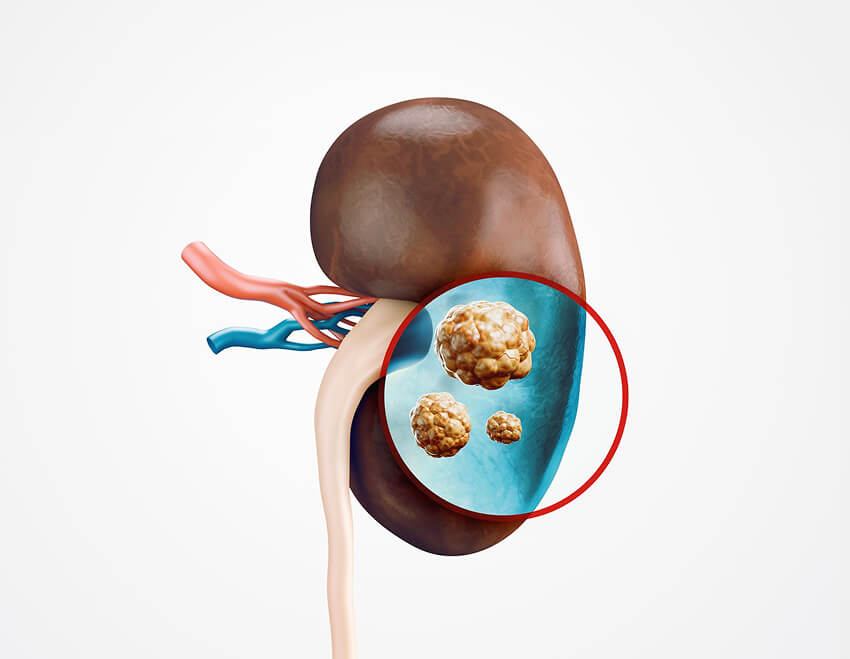
Kidney stones are hard mineral deposits that develop within the urinary tract, including the kidneys, ureters, or bladder. Stones are formed when urine becomes supersaturated, allowing dissolved minerals and salts to crystallise and gradually enlarge into stones. Recent research shows that stone development is influenced by hydration levels, metabolic factors, urinary chemistry, and lifestyle patterns rather than a single cause.
What Causes Kidney Stones and Who Is at Risk?
Kidney stones develop when substances such as calcium, oxalate, uric acid, or cystine become excessively concentrated in the urine and crystallise. While no single factor directly causes stone formation, the risk increases when there is an imbalance between stone-forming substances and the body’s ability to dilute or inhibit their crystallisation. Both lifestyle factors and underlying medical conditions play an important role in determining individual risk.
-
Genetic Predisposition to Kidney Stone Formation Individuals with a family history of kidney stones have a higher likelihood of developing stones themselves. This increased risk is often attributed to inherited metabolic tendencies that influence the way the body processes minerals and waste products involved in stone formation.
-
Low Fluid Intake and Concentrated Urine Inadequate fluid consumption leads to reduced urine volume and higher urine concentration, creating an environment that facilitates the crystallisation of stone-forming minerals. Consistent and adequate hydration helps dilute these substances and is recognised as the most effective preventive strategy against kidney stone formation.
-
Dietary Factors Contributing to Stone Risk Diet alone does not typically cause kidney stones in otherwise healthy individuals. However, in those predisposed to stone formation, certain dietary patterns may increase risk. High sodium intake, excessive consumption of animal protein, and diets rich in oxalate-containing foods can alter urine composition and promote stone development.
-
Medication-Related Risk Factors Certain medications can increase the risk of kidney stone formation, particularly when used long-term. These include diuretics, excessive calcium supplementation, and high-dose vitamin C, all of which may affect urinary mineral balance and contribute to stone development.
-
Underlying Medical Conditions Associated With Kidney Stones Several chronic medical conditions are linked to an increased risk of kidney stones. These include obesity, metabolic syndrome, gout, renal tubular acidosis, inflammatory bowel disease, and recurrent urinary tract infections. Effective management of these conditions is important in reducing both the risk of stone formation and recurrence.
What Are the Different Types of Kidney Stones?
Kidney stones are classified based on their chemical composition as follows:
-
Calcium oxalate stones are the most common type and form when calcium combines with oxalate in the urine.
-
Uric acid stones develop in persistently acidic urine and are often linked to metabolic disorders and high protein intake.
-
Struvite stones form in association with chronic urinary tract infections caused by specific bacteria.
-
Cystine stones are rare and occur due to inherited disorders affecting amino acid transport.
Identifying the stone type helps guide both treatment and long-term prevention strategies.
What Symptoms Can Kidney Stones Cause?
Kidney stones may sometimes be detected during routine health check-ups, especially when imaging is done for unrelated reasons. However, many patients develop noticeable symptoms as the stone grows or begins to move within the urinary tract.
Common symptoms include:
-
A dull, persistent ache in the lower back or flank region.
-
Sudden onset of severe colicky pain that starts from the side of the mid-back and radiates towards the groin, often described as one of the most intense pains experienced by patients.
-
Nausea, vomiting, abdominal bloating, and restlessness during painful episodes.
-
Increased frequency of urination or a constant urge to pass urine.
-
Pain, discomfort, or a burning sensation while urinating.
-
Visible or microscopic blood in the urine (haematuria).
-
Recurrent urinary tract infections, sometimes accompanied by fever and chills.
Severe pain associated with fever or reduced urine output should be treated as a medical emergency.
How Are Kidney Stones Investigated and Diagnosed?
Accurate diagnosis is essential to determine the size, location, composition, and impact of the stone on kidney function. Evaluation typically includes both laboratory tests and imaging studies.
-
Laboratory Investigations Complete blood count (CBC) and renal function tests are performed to assess kidney health and detect infection or inflammation.
-
Routine urine examination helps identify blood cells, pus cells, crystals, and signs of infection.
-
Urine culture and sensitivity testing is used to confirm urinary tract infection and select the most appropriate antibiotic therapy.
Which Imaging Tests Are Used to Detect Kidney Stones?
-
X-ray KUB is used to visualise radio-opaque stones and detect major structural abnormalities.
-
Ultrasound of the kidney, ureter, and bladder (KUB) helps assess stone size, location, and kidney swelling (hydronephrosis), although it does not provide detailed functional information.
-
CT scan of the abdomen and pelvis or CT urography is now considered the gold standard for stone detection. It provides precise information about stone size, location, density (measured in Hounsfield units), and the degree of obstruction. Non-contrast CT is commonly used, while contrast studies may be selected in specific situations.
Intravenous urography (IVU), once widely used, is now reserved for selected cases due to the superior accuracy of CT imaging.
When Is a Detailed Stone Work-Up Required?
Patients who develop stones repeatedly or at a young age require a metabolic evaluation to identify preventable causes and reduce recurrence.
This work-up may include:
Such evaluations play a key role in modern preventive stone care.
How Are Kidney Stones Treated?
Once a kidney stone is diagnosed, treatment decisions are based on stone size, location, symptoms, and kidney function. Many small stones pass spontaneously, while others require medical or surgical intervention.
It is well recognised that individuals who form kidney stones once have higher chances of it recurring, making appropriate treatment selection and long-term prevention essential.
When Is Active or Surgical Treatment Necessary?
Intervention is recommended when there is evidence of:
Can Kidney Stones Be Managed Conservatively?
Small kidney stones often pass naturally with adequate hydration, pain control, and medical therapy.
The likelihood of spontaneous passage depends on the stone’s size, shape, and position within the urinary tract.
Patients undergoing conservative treatment require close follow-up to ensure safe passage and avoid complications.
What Surgical and Minimally Invasive Treatments Are Available for Kidney Stones?
Kidney stone treatment today is much safer and less stressful than many people expect. Depending on the stone’s size, location, and symptoms, doctors can choose from several minimally invasive or surgical options that remove stones effectively while ensuring quick recovery and minimal discomfort.
-
Extracorporeal Shock Wave Lithotripsy (ESWL) ESWL is a non-invasive treatment option for kidney stones that are up to 1.5 cm in size. High-energy shock waves are generated outside the body and directed towards the stone, breaking it into fine fragments that pass naturally in the urine. In some cases, more than one session may be required for complete clearance. Temporary placement of a Double J (DJ) stent may be needed to facilitate drainage and prevent blockage during fragment passage.
-
Laser Stone Removal (Ureteroscopy) Endoscopic laser treatment allows direct visualisation and precise fragmentation of stones using modern laser technology. This approach is commonly used for ureteric and renal stones and offers high success rates with minimal recovery time.
-
Percutaneous Nephrolithotomy (PCNL) (Keyhole or Tunnel Surgery for Kidney Stones) PCNL is recommended for large, complex, or hard stones that are not suitable for ESWL or endoscopic treatment. The procedure involves creating a small tract from the back into the kidney under imaging guidance. A nephroscope is used to visualise the stone, which is then fragmented using laser or lithotripter devices and removed. The procedure is performed under general or regional anaesthesia, typically lasts around 90 minutes, and requires a short hospital stay of 3–4 days. Most patients return to light activities within a week. PCNL has significantly reduced the need for open kidney stone surgery, which is now rarely required. PCNL is commonly used for:
- Stones larger than 2.5 cm.
- Staghorn calculi.
- Stones located in calyceal diverticula.
Why Is Long-Term Follow-Up Important After Kidney Stone Treatment?
Getting a kidney stone removed doesn’t always mean the problem is gone forever. Kidney stones may come back if we’re not careful.
Regular follow-ups help your doctor check if new stones are forming early, before they start causing pain again. These visits also help you understand why the stone formed in the first place, sometimes it’s because of low water intake, food habits, or body chemistry.
Small changes can make a big difference. Drinking enough water every day, making a few diet changes, and doing simple tests when advised can greatly reduce the chances of stones coming back.
Follow-up care is a way to protect your kidneys in the long run and avoid another painful stone episode. A little care now can save you a lot of trouble later.