
Our services
Request an appointment
Reserve your spot with our medical team in just minutes.
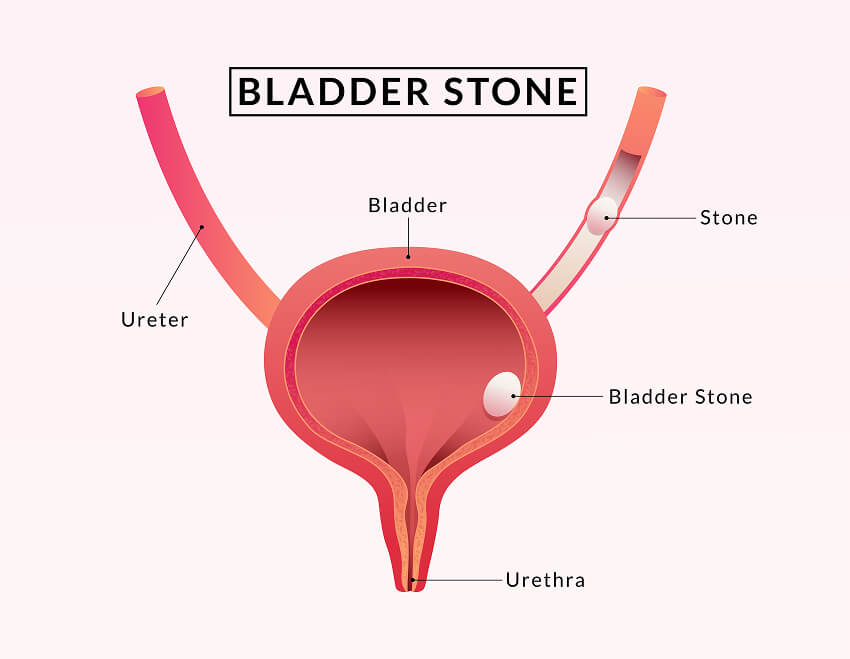
Bladder Stones
Bladder stones are a common urological problem, especially in adults with urinary obstruction and in older men. While they are less common than kidney or ureteric stones, bladder stones still account for a significant number of urology consultations and procedures in India. The condition is more frequently seen in men due to prostate-related urinary blockage, but it can affect women and children as well.
Bladder stones may either travel down from the kidney and ureter into the bladder or form directly inside the bladder when urine does not empty completely. When urine stays in the bladder for long periods, minerals crystallise and gradually form stones.
Understanding why bladder stones form is the first step toward effective treatment and prevention.
What Exactly Is a Bladder Stone?
A bladder stone, also known as a vesical calculus, is a hard mineral deposit that forms inside the urinary bladder. Unlike kidney stones, bladder stones are often linked to problems with urine flow rather than metabolic causes alone.
Bladder stones may develop in two ways:
Over time, retained urine allows crystals to grow larger, leading to painful and bothersome symptoms.
Bladder stones almost always indicate an underlying urinary problem that needs evaluation.
Why Do Bladder Stones Form in Adults?
Bladder stones usually form when urine stays in the bladder for too long. When the bladder does not empty completely, minerals in the urine start settling at the bottom. Over time, these minerals stick together and slowly grow into stones.
Common Causes of Bladder Stones:
-
Blockage at the bladder outlet, which is the most common cause.
-
An enlarged prostate (BPH), which makes it harder for urine to flow out smoothly.
-
A tight or raised bladder neck that slows urine drainage.
-
Urine left behind in the bladder after passing urine, instead of emptying fully.
-
Narrowing of the urine passage (urethral stricture), which restricts urine flow.
-
Nerve-related bladder problems, where the bladder does not contract properly.
In some cases, bladder stones can form without an obvious blockage, but this is uncommon in adults. Most of the time, there is an underlying issue that needs attention.
Simply removing the stone is not enough. Treating the root cause is important to stop the stone from forming again and to ensure long-term relief.
What Symptoms Do Bladder Stones Cause?
Bladder stones may remain silent for some time, especially if they are small. However, as the stone grows or moves within the bladder, symptoms usually develop.
Common symptoms include:
-
Pain or discomfort in the lower abdomen (suprapubic pain).
-
Burning or pain while passing urine.
-
Intermittent or stop-start urine flow.
-
Increased frequency of urination.
-
Difficulty starting urine flow (hesitancy).
-
Night-time urination (nocturia).
-
Sudden inability to pass urine (acute urinary retention).
-
Blood in the urine, especially after activity.
Symptoms often worsen with movement, as the stone irritates the bladder lining.
Persistent urinary symptoms should never be ignored, especially in older adults.
When Should Bladder Stones Be Treated Urgently?
Bladder stones require prompt attention when they interfere with normal urination or cause infection.
Urgent treatment is needed if there is:
Treating bladder stones at the right time helps relieve symptoms, prevents complications, and keeps the bladder healthy in the long run.
How Are Bladder Stones Diagnosed?
To decide the safest and most effective way to remove the stone, doctors first need a clear picture of where the stone is, its size, and any underlying issues. These tests give all the information needed to plan the treatment.
-
X-ray KUB: This often shows the stone clearly in the lower part of the abdomen, where the bladder is located.
-
Ultrasound (Sonography): This confirms the presence of the stone and also checks prostate size, bladder wall thickness, and whether any urine is left behind after passing urine.
-
Cystoscopy: In some cases, a small camera is passed through the urine opening to directly see the stone and examine the urine passage and prostate.
With the right diagnosis and timely treatment, bladder stones can be safely removed, and most patients recover quickly. Regular follow-ups, staying hydrated, and monitoring urinary health can help keep your bladder healthy in the long run.
What Are the Treatment Options for Bladder Stones?
The choice of treatment depends on the size, number, and hardness of the stone, as well as associated conditions such as prostate enlargement.
What Is Transurethral Litholapaxy and When Is It Used?
Transurethral litholapaxy is the most commonly used method to remove bladder stones today. It is minimally invasive, meaning no cuts or stitches are needed.
Here’s How the Procedure Works:
Because this procedure uses natural openings, recovery is usually quick. It is especially suitable for small to medium-sized bladder stones and helps patients get relief safely and efficiently.
When Is Percutaneous Suprapubic Cystolithotomy Preferred?
For larger bladder stones, a percutaneous approach is often safer and more effective. This method is slightly more involved than transurethral removal but still minimally invasive compared to open surgery.
Key Features of This Approach
-
A small, tiny incision is made just above the pubic bone.
-
A short, wide scope called a nephroscope is used to reach the bladder.
-
Stones are broken into smaller pieces using ultrasonic or pneumatic devices.
-
In some cases, doctors combine this with transurethral access to improve stone clearance and fluid flow during the procedure.
This technique allows large stones to be removed safely and quickly, giving excellent outcomes and a faster recovery than traditional open surgery.
When Is Open Suprapubic Cystolithotomy Required?
Open surgery is now rarely required but may be necessary in select cases.
It is usually considered when:
Open surgery allows complete stone removal and simultaneous correction of underlying obstruction if required. With modern techniques, open surgery is reserved for exceptional situations only.
What Happens After Bladder Stone Removal?
Most patients recover quickly after bladder stone treatment. Some temporary discomfort is normal.
It’s important to also treat the underlying cause, like an enlarged prostate, to prevent the stones from coming back. Regular follow-ups help ensure long-term relief, keep your bladder healthy, and prevent future problems.
How Can Bladder Stones Be Prevented from Recurring?
Prevention focuses on correcting urine flow problems and maintaining good urinary habits. Preventive measures include:
Bladder stones are often a sign of an underlying urinary obstruction and should never be treated casually. With modern minimally invasive techniques, bladder stones can be removed safely and effectively. Early diagnosis, proper treatment, and correction of the root cause help restore comfortable urination and prevent recurrence.