


Understanding Kidney Tests: CT Scan, Ultrasound, and Blood Work
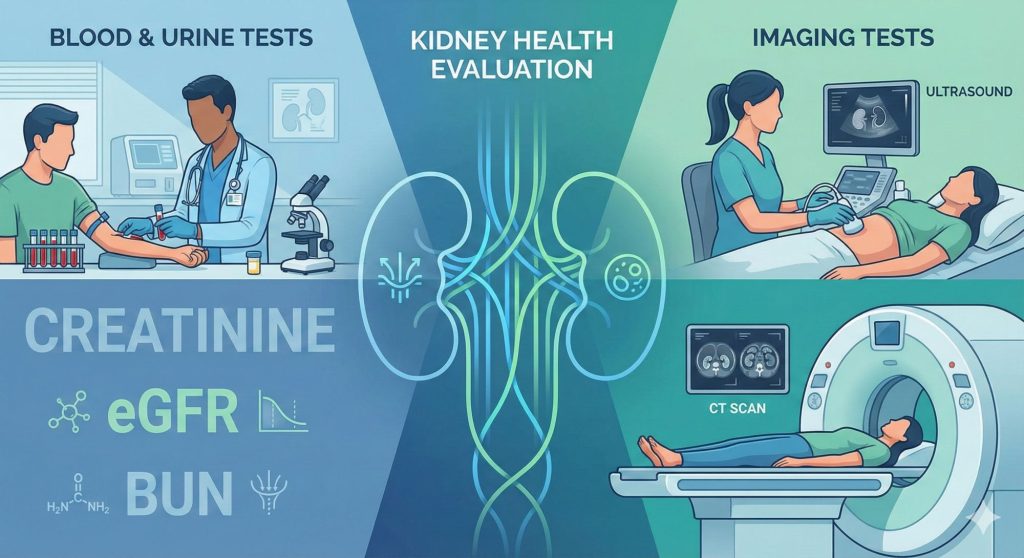
When something feels wrong with your kidneys, the first thing most people feel is confusion. Test names sound complicated, reports are full of numbers, and it is not always clear what each investigation is actually looking for. Many patients worry that every test means something serious, while others delay testing because they do not understand its importance.
Kidney tests are not just about diagnosing disease. They help doctors understand how well your kidneys are working, identify the cause of symptoms, detect stones or infections, and rule out serious conditions like cancer at an early stage.
This blog explains kidney tests in simple language, including kidney function tests, how kidney stones are diagnosed, and imaging tests for cancer detection. By the end, you will know why these tests are done, what they show, and how they guide treatment decisions.
Why Kidney Tests Are Important
Your kidneys quietly perform life-saving work every minute. They filter waste from the blood, balance fluids, regulate electrolytes, control blood pressure, and support bone and red blood cell health.
Kidney problems often develop silently. Many people do not notice symptoms until the condition is advanced. Kidney tests help detect issues early, when treatment is simpler and outcomes are better.
Doctors recommend kidney testing when you have:
- Pain in the side or lower back
- Blood in urine
- Swelling of feet or face
- Recurrent urinary infections
- High blood pressure
- Diabetes
- Family history of kidney disease
- Suspected kidney stones or tumors
Categories of Kidney Tests
Kidney evaluation usually involves a combination of tests rather than a single investigation.
The main categories include:
- Blood tests
- Urine tests
- Imaging tests such as ultrasound and CT scan
Each test answers a different question, and together they provide a complete picture of kidney health.
Blood Work: Understanding Kidney Function Tests
A kidney function test is usually the first step in evaluating kidney health. These blood tests show how efficiently your kidneys are filtering waste.
Serum Creatinine
Creatinine is a waste product produced by muscles. Healthy kidneys remove it from the blood.
- High creatinine suggests reduced kidney function
- Levels vary based on age, muscle mass, and gender
Creatinine alone does not give the full picture, which is why doctors calculate additional values.
Estimated Glomerular Filtration Rate (eGFR)
eGFR estimates how well your kidneys are filtering blood.
- Normal eGFR is usually above 90
- Lower values indicate reduced kidney function
- Persistent low eGFR suggests chronic kidney disease
eGFR helps determine the stage of kidney disease and guides treatment decisions.
Blood Urea Nitrogen (BUN)
Urea is another waste product filtered by the kidneys.
- Elevated BUN may indicate kidney dysfunction
- It can also rise due to dehydration or high protein intake
Doctors interpret BUN alongside creatinine for accuracy.
Electrolytes and Minerals
Kidney tests often include:
- Sodium
- Potassium
- Calcium
- Phosphorus
Imbalances can affect heart rhythm, bones, muscles, and nerves, making these values critical for monitoring kidney health.
Urine Tests and Their Role
Urine testing complements blood work by showing how kidneys handle filtration and waste removal.
Urine Routine Examination
This checks:
- Protein
- Blood
- Infection markers
- Sugar
- Crystals
Protein or blood in urine can be an early sign of kidney disease.
Urine Albumin to Creatinine Ratio (ACR)
This test detects very small amounts of protein in urine.
- Helps diagnose early kidney damage
- Especially important for diabetics and hypertensive patients
Ultrasound: The First Imaging Test for Kidneys
Ultrasound is often the first imaging test ordered for kidney evaluation.
What Is a Kidney Ultrasound?
A kidney ultrasound uses sound waves to create images of the kidneys and surrounding structures. It is painless, radiation-free, and widely available.
What Ultrasound Can Detect
- Kidney size and shape
- Kidney stones
- Fluid buildup
- Cysts
- Tumors
- Obstruction in urine flow
- Structural abnormalities
Ultrasound is especially useful for initial evaluation and follow-up monitoring.
Advantages of Ultrasound
- No radiation exposure
- Safe for pregnant women
- Quick and non-invasive
- Cost-effective
However, ultrasound may miss very small stones or early tumors, which is where CT scans come in.
CT Scan: A Detailed Look Inside the Kidneys
A CT scan provides more detailed images than ultrasound and plays a key role in diagnosing kidney conditions.
How a CT Scan Works
A CT scan uses X-rays and computer processing to create cross-sectional images of the kidneys, ureters, and bladder.
How Kidney Stones Are Diagnosed Using CT Scan
When doctors need to know how kidney stones are diagnosed, CT scan is often the gold standard.
CT scans can:
- Detect even very small stones
- Identify stone size and location
- Determine blockage severity
- Help plan treatment
Non-contrast CT scans are commonly used for kidney stones and are highly accurate.
CT Scan for Infections and Blockages
CT scans help detect:
- Severe infections
- Abscesses
- Structural damage
- Urinary tract obstruction
This information helps doctors decide whether medical or surgical treatment is needed.
Imaging Tests for Cancer Detection
Detecting kidney cancer early greatly improves outcomes. Imaging plays a central role.
Ultrasound in Cancer Detection
Ultrasound may detect:
- Solid masses
- Cysts
- Abnormal kidney enlargement
However, ultrasound cannot always differentiate benign from malignant lesions.
CT Scan for Kidney Cancer
CT scan is one of the most important imaging tests for cancer detection.
It helps:
- Confirm suspicious masses
- Determine tumor size
- Assess spread to nearby tissues
- Plan surgery or treatment
Contrast-enhanced CT scans are especially useful for cancer evaluation.
MRI in Special Cases
MRI may be used when:
- CT contrast is unsafe
- More detail is needed
- Blood vessel involvement is suspected
MRI provides excellent soft tissue contrast without radiation.
Preparing for Kidney Tests
Blood and Urine Tests
- Usually require minimal preparation
- Fasting may be advised in some cases
- Inform your doctor about medications
Ultrasound Preparation
- You may be asked to drink water
- A full bladder improves image quality
CT Scan Preparation
- Fasting may be required
- Contrast dye may be used
- Kidney function is checked before contrast administration
Your healthcare team provides clear instructions before each test.
Understanding Test Results Without Panic
Seeing abnormal values on a report can be frightening, but one abnormal result does not always mean serious disease.
Doctors consider:
- Symptoms
- Trends over time
- Multiple test results together
- Your overall health
Always discuss reports with your doctor rather than interpreting them alone.
When Multiple Tests Are Needed
Many kidney conditions cannot be diagnosed with a single test. Blood work shows function, urine tests show filtration, and imaging shows structure.
Together, they answer:
- Are the kidneys working properly?
- Is there blockage or damage?
- Is there infection, stone, or tumor?
- How severe is the problem?
This combined approach leads to accurate diagnosis and appropriate treatment.
When to See a Specialist
You should consult a urologist or nephrologist if:
- Kidney function tests are abnormal
- Imaging shows stones, tumors, or obstruction
- Symptoms persist or worsen
- You have recurrent kidney stones or infections
- You have diabetes or long-standing hypertension
Early specialist care prevents long-term complications.
Living With Ongoing Kidney Monitoring
Some people need regular kidney tests due to chronic conditions. Monitoring is not a sign of failure; it is a proactive step to protect long-term health.
Regular testing allows:
- Early detection of changes
- Adjustment of medications
- Prevention of disease progression
Conclusion
Understanding kidney tests removes fear and empowers you to take charge of your health. Kidney function tests show how well your kidneys work, imaging explains structure and damage, CT scans reveal how kidney stones are diagnosed, and advanced imaging tests for cancer detection help identify serious conditions early.
Each test has a purpose, and together they form a clear picture that guides treatment decisions. If your doctor recommends kidney testing, see it as a step toward clarity, not something to fear.
When kidney problems are detected early, outcomes are better, treatment is simpler, and quality of life is preserved.
Faqs
1. What is a kidney function test and why is it done?
A kidney function test is a blood test that checks how well your kidneys are filtering waste from the body. It helps detect kidney disease early, monitor existing problems, and guide treatment decisions before symptoms become severe.
2. Which blood tests show kidney health?
Kidney health is commonly assessed using serum creatinine, eGFR, blood urea nitrogen, and electrolyte levels. Together, these tests show how efficiently your kidneys are working and whether there is any imbalance affecting your overall health.
3. How are kidney stones diagnosed?
Kidney stones are usually diagnosed using imaging tests, most often a CT scan. Ultrasound may also detect stones, but CT scans are more accurate in identifying stone size, location, and blockage severity.
4. Is ultrasound enough to check kidney problems?
Ultrasound is a good first test for kidney problems because it is safe and painless. However, it may miss small stones or early tumors, which is why doctors sometimes recommend CT scans for clearer and more detailed results.
5. Why is a CT scan needed for kidney pain?
A CT scan provides detailed images of the kidneys and urinary tract. It helps doctors identify kidney stones, infections, blockages, or tumors quickly and accurately, especially when pain is severe or diagnosis is unclear.
6. Are CT scans safe for kidney patients?
CT scans are generally safe, but contrast dye may affect kidney function in some patients. Doctors check kidney function before using contrast and may choose non-contrast scans or alternative imaging if there is any risk.
7. Can kidney cancer be detected through scans?
Yes, kidney cancer is often detected through imaging tests such as ultrasound, CT scan, or MRI. CT scans are especially useful for confirming suspicious masses and determining the size and spread of tumors.
8. Do abnormal kidney test results always mean kidney disease?
Not always. Temporary factors like dehydration, infections, medications, or recent illness can affect kidney test results. Doctors usually repeat tests and review trends over time before diagnosing a chronic kidney condition.
9. How should I prepare for kidney blood tests or scans?
Most blood and urine tests need little preparation. For ultrasound, you may need a full bladder. For CT scans, fasting or blood tests may be required, especially if contrast dye is planned.
10. When should I see a doctor about kidney test results?
You should see a doctor if test results are abnormal, symptoms persist, or imaging shows stones, infection, or masses. Early discussion helps prevent complications and ensures timely treatment or further evaluation if needed.