
Our services
Request an appointment
Reserve your spot with our medical team in just minutes.
Ureteric Stones
Ureteric stones are one of the most painful and commonly treated urological conditions worldwide.
In India alone, millions of people suffer from urinary stone disease every year, with ureteric stones accounting for a large percentage of emergency urology visits.
Studies show that nearly 1 in 10 people will develop a urinary stone at some point in their life, and recurrence is common if preventive care is not followed.
The problem is especially common in places with hot climates, dehydration, and dietary patterns that increase stone formation. As lifestyles have become more sedentary and fluid intake has reduced, the number of ureteric stone cases have risen in recent years.
Knowing how ureteric stones form and how they are treated helps you act on time. When you understand the early signs, you’re less likely to ignore pain or delay seeing a doctor.
What Is a Ureteric Stone?
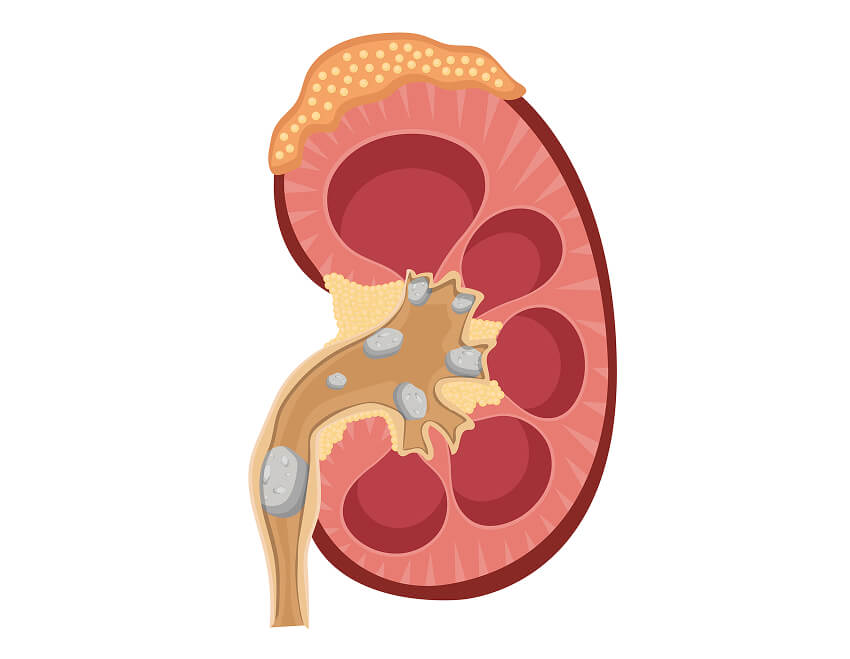
A ureteric stone is a hard mineral deposit that becomes lodged in the ureter, which is the narrow tube that carries urine from the kidney to the urinary bladder.
While stones usually form in the kidney, they cause the most symptoms when they travel down and get stuck in the ureter.
To understand why this is problematic, let’s first understand how the Ureter functions:
When a stone blocks urine flow, pressure builds up in the kidney and ureter, leading to severe pain and possible kidney damage.
This blockage is the main reason ureteric stones need careful medical attention.
Why Do Ureteric Stones Cause Such Severe Pain?
Pain from ureteric stones is often sudden, intense, and difficult to ignore. Many patients describe it as the worst pain they have ever experienced.
This happens because the ureter tries to push urine past the stone using strong muscular contractions.
When the stone does not move, pressure increases, causing spasms and stretching of the urinary tract.
-
Pain starts in the side or back (flank area).
-
It moves toward the lower abdomen or groin.
-
The pain comes in waves and does not settle with rest.
-
Nausea and vomiting are common due to pain intensity.
-
Closure: Once the surgery is complete, the instruments are removed, and the small incisions are closed with sutures or surgical glue.
-
Optional Drain Placement: In some cases, a small drain may be placed to remove fluid and reduce the risk of infection or bleeding.
This characteristic pain is often the first sign where patients rush to the hospital.
What Are the Common Symptoms of Ureteric Stones?
Symptoms vary depending on the stone’s size, location, and whether infection is present. Some stones may remain silent, while others cause dramatic symptoms.
Common symptoms include:
-
Sudden, sharp pain radiating from the back to the groin.
-
Persistent dull ache in the lower back.
-
Burning or pain during urination.
-
Increased frequency or urgency to pass urine.
-
Blood in the urine, visible or microscopic.
-
Nausea and vomiting associated with pain.
-
Fever and chills if infection develops.
Any combination of severe pain and fever should never be ignored.
When Should a Ureteric Stone Be Treated as an Emergency?
Certain situations make ureteric stones dangerous and require immediate, urgent medical care.
Warning signs include:
An obstructed and infected kidney is a medical emergency and needs immediate medical treatment.
How Are Ureteric Stones Diagnosed Accurately?
Finding out exactly what’s going on helps the doctor decide whether the stone can pass on its own or needs treatment. Not every stone needs surgery, and the right tests make this clear.
-
Blood and Urine Tests Initial tests help assess kidney function and infection:
- Complete blood count (CBC) to detect infection.
- Kidney function tests to assess damage or obstruction.
- Urine routine examination to detect blood or pus cells.
- Urine culture to identify infection and guide antibiotics.
-
Imaging Tests Used Today To understand the stone clearly and decide the best way forward, doctors rely on a few simple and reliable imaging tests. These tests help pinpoint the stone’s size, exact location, and how it may affect the kidney.
- Ultrasound (KUB): Detects kidney swelling and larger stones.
- X-ray KUB: Useful for tracking calcium-based stones.
- CT scan (non-contrast CT KUB): Gold standard for stone detection. It shows exact size, location, and density.
- CT urography or IVU: Used selectively to assess anatomy and kidney function.
These investigations help create a personalised and safe treatment plan.
Do All Ureteric Stones Need Surgery?
Not every ureteric stone needs surgical treatment. Many small stones can pass naturally with proper medical support.
The decision depends on:
The goal is always to relieve pain, protect the kidney, and clear the stone safely.
What Are the Treatment Options for Ureteric Stones?
Treatment today focuses on minimally invasive methods that offer faster recovery and excellent success rates.
Medical and Conservative Treatment for Small Stones
Small ureteric stones often pass on their own, so surgery is not always needed. The goal during this time is to reduce pain, help the stone move, and keep a close watch on your condition.
This usually includes:
During this waiting period, stay alert to your body. If pain becomes severe, you get a fever, or feel unwell, reach out to your doctor without delay.
What Is Ureteroscopy (URS) and How Does It Remove Stones?
Ureteroscopy, or URS, is one of the most common and safe procedures used to remove stones stuck in the urine pipe. The biggest relief for patients is that there are no cuts or stitches on the body.
The procedure is done under anaesthesia, so you don’t feel pain while it’s happening. Most patients are able to walk, eat, and go home within a short time.
In simple terms, URS removes the stone from inside, without surgery, and helps give quick relief from pain and blockage.
How URS Works:
URS has a very high success rate and allows precise stone removal. Most patients return to normal activity within a few days.
What Are the Different Types of Ureteroscopy?
The type of ureteroscopy used depends on where exactly the stone is stuck. Doctors choose the scope that can reach the stone safely and effectively.
-
Rigid ureteroscopy: This uses a straight, thin scope. It works best for stones located in the lower or middle part of the urine pipe. These stones are easier to access, and removal is usually quick.
-
Flexible ureteroscopy: This scope can bend and move easily. It helps reach stones higher up in the urine pipe or close to the kidney, where straight scopes cannot go safely.
-
Retrograde Intrarenal Surgery (RIRS): This is an advanced form of flexible ureteroscopy used mainly for kidney stones. A laser is used to break the stone into fine dust so it can pass out naturally later.
Most patients need only a short hospital stay, often just one day or overnight. Because these procedures are done through natural openings, open surgery is now rarely required.
Is Shock Wave Lithotripsy (SWL) Still Used for Ureteric Stones?
Shock Wave Lithotripsy, or SWL, is a treatment where strong sound waves are used to break the stone from outside the body. There are no cuts, scopes, or instruments going inside.
During the procedure, sound waves are focused on the stone to break it into smaller pieces. These tiny pieces then pass out naturally in the urine over time.
SWL works best in selected cases. Doctors decide if it’s suitable based on:
Not all ureteric stones break well with this method, so choosing the right patient is important. When used in the right situation, SWL remains a safe and non-invasive treatment option.
When Is Open Surgery Required for Ureteric Stones?
Open surgery for ureteric stones is now very rare. With today’s advanced treatments, most stones can be managed without big cuts or major operations.
Open surgery is usually considered only in a few situations, such as:
Thanks to modern endourology, these situations don’t come up often. Most patients today can be treated with safer, less invasive methods and recover much faster without major surgery.
What Can Patients Expect After Ureteric Stone Treatment?
Recovery after today’s stone treatments is usually smooth and quick. Most patients start feeling better within a short time.
It’s normal to have mild burning while passing urine or see a little blood for a few days. If a DJ stent has been placed, you may feel some urinary discomfort, frequent urge to pass urine, or mild pain until it is removed.
Most people can return to their daily routine within a few days, depending on the treatment done and how they feel.
Follow-up scans or tests are important to make sure the stone has been completely cleared. Good aftercare and regular follow-ups also help reduce the chances of stones coming back or causing problems later.
How Can Ureteric Stones Be Prevented from Coming Back?
Kidney stones often come back if preventive care is ignored. Treating the stone is only one part of the solution. Preventing the next one is just as important.
Prevention usually focuses on:
Ureteric stones are common, painful, and potentially dangerous if ignored. With modern diagnostics and minimally invasive treatments, most stones can be treated safely and effectively.
Early consultation with a urologist ensures faster pain relief, protects kidney function, and reduces the risk of future stones.